Turkey Talk: How the Thanksgiving Bird Got Its Name
Alaine Peaslee-Hinshaw of the Vanceboro Historical Society traces how the turkey got its name and became the centerpiece of the holiday table.
By Alaine Peaslee-Hinshaw, Vanceboro Historical Society
A roast turkey is the main feature of the Thanksgiving feast for millions of people, but how many people know how turkey got its name or how the tradition evolved?
Strangely, it was in a British book about Christmas traditions that I learned that it was in England where turkey became the center piece of royal banquet tables, literally the center piece. Royal and wealthy Brits had the tradition of featuring large, cooked Swans or Peacocks, presented with their heads, feathers and skin reattached, as theatrical, lifelike centerpieces. But while both Swans and Peacocks were pleasing to the eye, their meat was tough, dry, stringy and difficult to digest. The Brits had been importing more palatable poultry called guinea fowl from Africa, called "turkey fowl or hens" because the birds were shipped by Turkish merchants by way of Turkey. When the New World, or American bird showed up in the 1500s through the same trade route it was referred to as turkey. Turkey became a royal delicacy because it was far more tender and had more meat. It became an elite status symbol and an English Christmas feast tradition.
Turkeys are native to Central America. In the wild they are renowned for being both aggressive and crafty, and they were domesticated relatively late, between 1,500 and 2,000 years ago. People in Mexico were raising them about 2,000 years ago. Once brought into the farming system, though, they rapidly spread far beyond their original pecking grounds and by the time Columbus and his fellow explorers arrived, they were also being enjoyed in North America and the Caribbean. Spanish explorers carried the birds back to Europe in the early 1500s. Unlike many new world foods (such as tomatoes) their value was immediately recognized, and old world (European/Mediterranean) enthusiasm quickly kindled. By 1511 every ship leaving the Americas for Spain was ordered to bring back five breeding pairs to kick start the turkey industry there. Britain probably obtained its first turkeys from the Spanish, who brought the birds back to Europe after encountering them in the Aztec empire. However, it is possible that they were introduced by William Strictland, a Yorkshire sailor/merchant who traveled to the New World in the 16th century. As usual for new world ingredients, they spread throughout Europe. ( Excerpted from the "queen of food historians" Annie Gray's At Christmas We Feast; FestiveFood Through the Ages.)
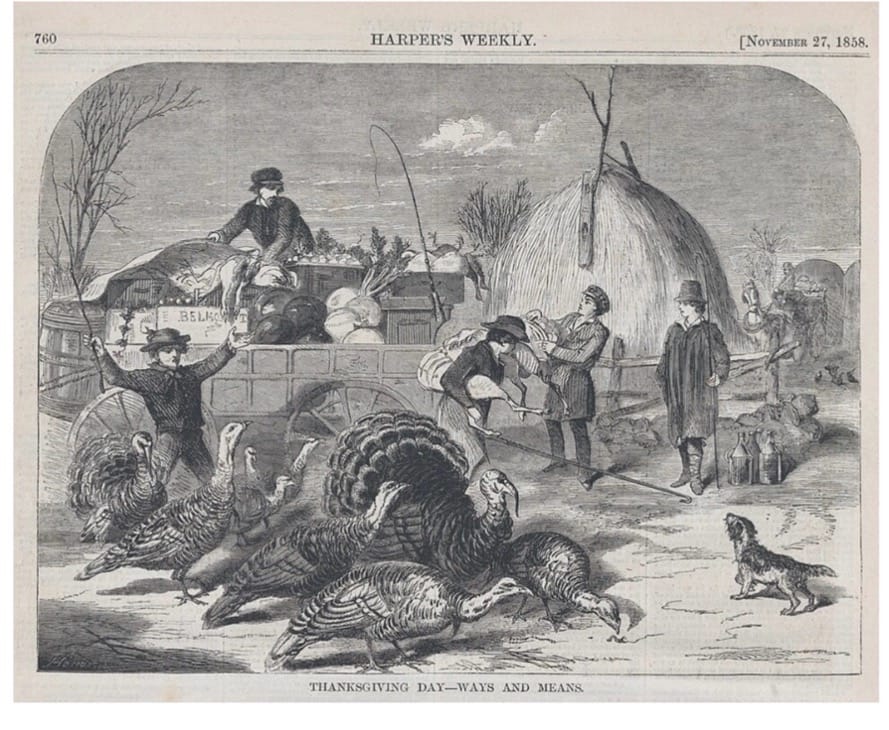
The wild Maine turkeys, which seem to be everywhere, aren't considered particularly good eating compared to farm raised turkeys. Before truck and rail transportation, as farmed turkey became more abundant and affordable, flocks of hundreds to thousands of turkeys were walked on "drives" by "Drovers" & "shooers" with long herding poles, from farms to markets. The slow procession, 1 mile per hour, covered about 10 miles a day. Feed was scattered along the path to keep the birds moving and to maintain their weight. Their feet were dipped in tar & sand to protect them for the journey. Cuero, Texas, was the self-proclaimed Turkey Capital of the World. It built its identity around the turkey drives of the late 1800s.
Wild turkeys in Maine appear to be abundant now, but they almost went extinct in the 1930's from loss of forest habitat due to clearing land for agriculture and unrestricted, over hunting. Maine's modern abundance is a result of a successful reintroduction program started by wildlife biologists in the 1970's.
Now a days, turkey drives or "trots" are charitable events. To this day, Cuero, Texas, hosts a "Turkey Trot" parade and a Great Gobbler Gallop turkey race every year. Another example is the Brewer, Maine, Penquis non-profit, turkey donation event. Now I know why the annual Thanksgiving morning, Denver, Colorado United Way fund-raiser event is called The Turkey Trot.
Happy Thanksgiving
Sources:
Annie Gray's At Christmas We Feast; Festive Food Through the Ages.
Sandra Wagner-Wright, Thanksgiving, Turkey Drives; sandrwagnerwright.com; Harper's Weekly, November 27, 1858, "Thanksgiving Day --Ways & Means" image.
Andrew F. Smith, The Turkey: An American Story
Map, BBC IDEAS
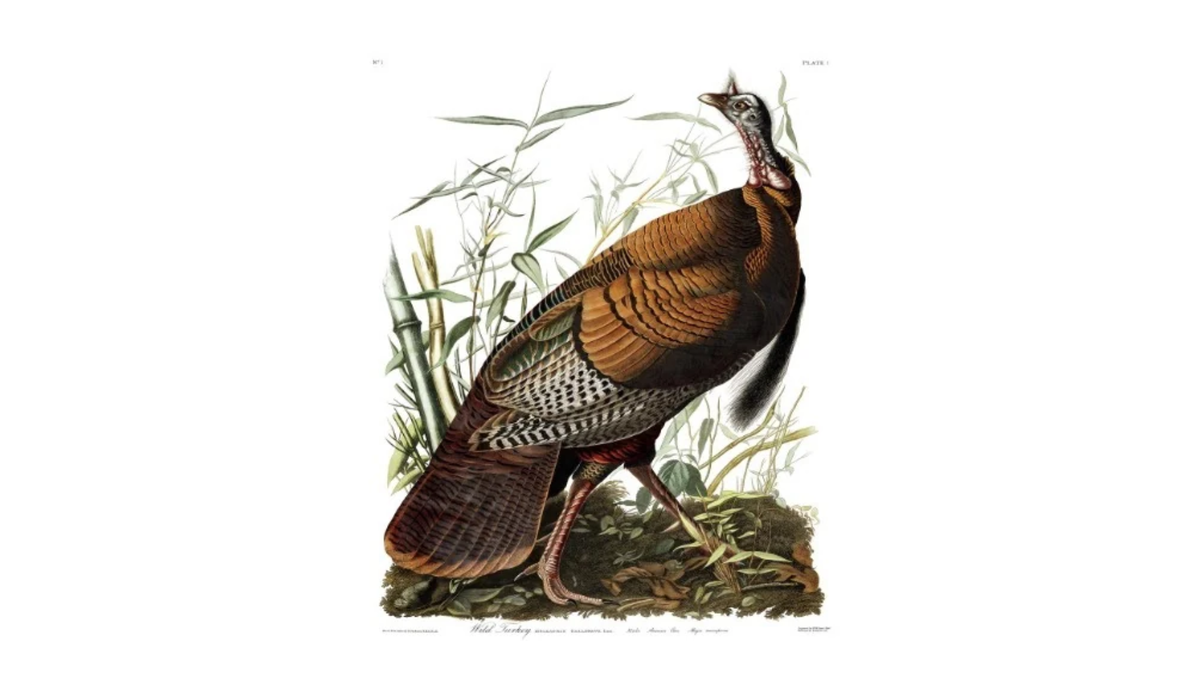
Art work is "The Wild Turkey" (Plate 1) by American naturalist and painter John James Audubon, from his monumental series The Birds of America.