
Calling All Birders
"We all expect to find books inside our local library, but we don’t expect to see taxidermy birds." After visiting over 200 Maine libraries, one backyard birdwatcher discovers a fascinating, century-old world of preserved collections hidden right on the shelves.

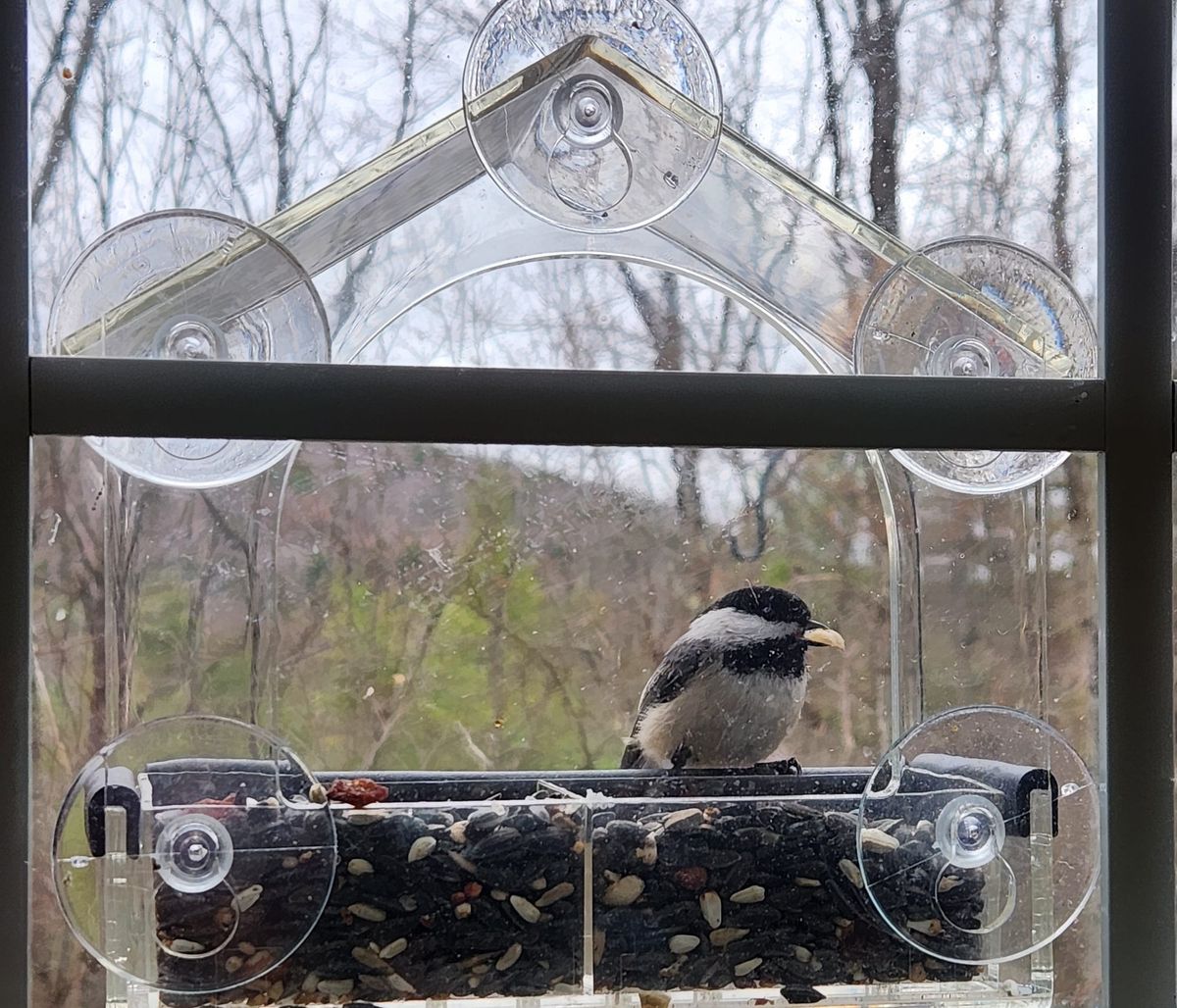
We all expect to find books inside our local library, but we don’t expect to see taxidermy birds. After visiting over 200 Maine libraries I have come to expect the unexpected within the walls of a library. Many libraries across Maine have a taxidermy bird; some even have whole collections. It is a pretty common joke that a sudden interest in birds will occur at some point in your adult life. I found it to be true that in my 30s I suddenly got interested in birds.
My neighbors surely catch me bolting out the door, stomping across my deck, and waving my hands like an inflatable tube man to scare squirrels away from my feeders. At least I hope they see the part where I am scaring the squirrels and not just the aforementioned portion. I also tend to get caught stopping suddenly when there is a bright flicker of yellow in a tree, hoping to see an American Goldfinch. When I was a child, I liked to watch the robins hopping around the lawn looking for worms after a rainstorm but otherwise I wasn’t overly interested in birds. I hate to admit now that I used to be annoyed in the spring when loud bird calls woke me up in the morning. Now, I listen in bliss believing they are singing to me.
I don’t consider myself a ‘birder’. I am not walking around with binoculars hanging from my neck and traveling to places where rare birds are known to hang around. I am a backyard watcher and casual browser of an area that I am already in. What I didn’t expect to find on my travels to over 200 Maine libraries is the collections of taxidermy birds. I was fascinated at being able to see these birds up close, to study the details of their being.
The library that takes up the most space in the bird section of my brain is the Weld Free Public Library. This library has an outstanding collection of birds. Most of the birds on display at the Weld Library were preserved in the 1800’s. I am amazed at the color and details these preserved birds still hold after over 100 years. The story is a young Weld boy would bring local birds to his mother who would mount them for him. As I sat in a cushy armchair at the library I thought of this boy’s mother. What an artist this woman was. I questioned the materials she had to work with during this time period. I briefly thought of the boy and how he was catching all these birds. My guess is a patient boy with a slingshot, but that is pure speculation. I admire the mother and imagine the shake of her head when her son brings her yet another bird to mount. Did they ever think that hundreds of years later I would be so impressed and intrigued by this mother and son relationship?
Pembroke Library in Pembroke, Maine also has a fascinating bird display. Their bird display has a large variety of song birds, water fowl, and birds of prey. The library inherited this bird display set up in multiple glass cases with little information about their origin. The birds are believed to be all local to the area. A map of the cases with the identification of each bird is displayed. What I was drawn into with this display was the variety of birds. Many of the larger birds are rarely seen close up in the wild. I appreciated the way this display gave me the opportunity to really see the details of the birds in a way that books, photographs, and even videos cannot portray. A lesson in nature that I am grateful to have gained by visiting libraries in Maine.
Maybe it has happened to you, at some point in your life you found yourself in a check out lane with a bird feeder and a bag of seeds. Maybe you bought an expensive pair of binoculars with dreams of seeing rare birds through the lenses. Whatever your level of bird interest, a library will meet you where you are at from basic bird resources to more in-depth research materials and some even have museum quality pieces of bird taxidermy.